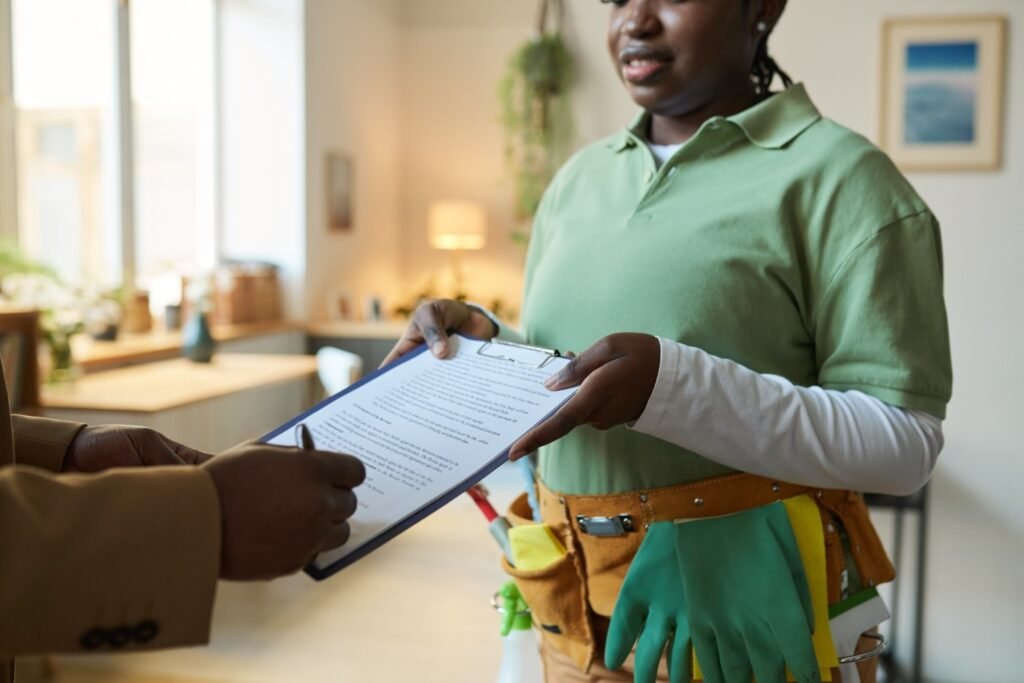
If you manage one to four rental units, maintenance probably isn’t happening on a schedule — it’s happening when something breaks. A water heater fails on a Sunday. A tenant calls about a leaking roof three months after it started. By the time you find out, you’re looking at an emergency repair bill instead of a routine fix. A rental property maintenance checklist fixes that by turning maintenance from a reaction into a routine.
The landlords who avoid the worst repair bills aren’t the ones with more time or more money — they’re the ones with a system. A rental property maintenance checklist gives you that system: a simple list of what to check, how often, and what to do if something needs attention before it becomes an expensive problem or a habitability complaint.
This guide walks through a practical rental property maintenance checklist you can start using this week, plus how landlord tool options and property maintenance automation software fit in once you’re managing more than a unit or two.
This article is for informational purposes only and does not constitute legal or tax advice. Laws vary by state. Consult a qualified attorney or tax professional for advice specific to your situation.
Why a Maintenance Checklist Matters for 1-4 Unit Landlords
Most small landlords don’t have a maintenance team. You’re the property manager, the handyman, and the person who fields the 9 p.m. text about a clogged drain. Without a rental property maintenance checklist, small issues stack up quietly until they surface all at once — usually at the worst possible time, like a lease renewal or a new tenant move-in.
There’s also a legal dimension. In most states, landlords have an ongoing duty to keep a rental unit habitable — safe, sanitary, and functioning — regardless of what the lease says. Nolo’s overview of landlord repair responsibilities breaks down what “habitable” typically covers, from working plumbing and heat to structural safety. A consistent rental property maintenance checklist is one of the simplest ways to stay ahead of that duty instead of reacting to a complaint or a withheld rent payment.
If you’re in Florida, this matters even more. Florida Statute 83.51 spells out a landlord’s maintenance obligations for residential rentals, including structural components, plumbing, and pest control in most cases. Miami landlords dealing with humidity, older housing stock, and hurricane season have extra reason to keep maintenance on a schedule rather than a memory.
The Rental Property Maintenance Checklist
Here’s a rental property maintenance checklist broken into the areas that cause the most calls and the most expensive repairs when ignored.
Exterior and structure
- Roof, gutters, and downspouts (check for debris, sagging, or leaks)
- Siding, paint, and caulking around windows and doors
- Foundation for cracks or settling
- Driveway, walkways, and steps for trip hazards
- Fencing and gates
Plumbing
- Water heater (age, corrosion, pressure relief valve)
- Under-sink and toilet connections for slow leaks
- Water pressure and drainage speed
- Exterior spigots and irrigation lines
HVAC and systems
- Filter replacement (monthly to quarterly depending on system)
- Annual professional tune-up before peak season
- Thermostat function
- Ductwork for visible damage or disconnection
Electrical and safety
- Smoke detectors and carbon monoxide detectors (test monthly, replace batteries twice a year)
- GFCI outlets in kitchens and bathrooms
- Visible wiring or panel issues
- Fire extinguisher presence and expiration (where applicable)
Interior and appliances
- Appliance function (stove, fridge, dishwasher, washer/dryer if provided)
- Window and door seals
- Signs of pests or moisture
- Flooring and grout condition
Grounds
- Lawn care and drainage grading (water should slope away from the foundation)
- Tree limbs near the roofline
- Shared or common area lighting
Keep this rental property maintenance checklist somewhere you’ll actually use it — a shared spreadsheet, a notes app, or a dedicated landlord tool built for tracking recurring tasks across units. While you’re setting up your records, it only takes a minute to generate your free rent receipt at FreeRentReceipt.com so your payment documentation is just as organized as your maintenance log.
How Often to Inspect Each Item
A rental property maintenance checklist only works if it’s tied to a schedule. As a general rule of thumb for 1-4 unit properties:
- Monthly: Smoke/CO detector tests, HVAC filter checks, quick walk-around for obvious issues
- Quarterly: Plumbing checks, exterior inspection, pest signs
- Twice a year (spring/fall): Full interior and exterior walkthrough, gutter cleaning, HVAC professional service
- Annually: Roof inspection, water heater flush, smoke detector battery replacement, lease-renewal walkthrough
Tie these to move-in and move-out inspections too — a rental property maintenance checklist done at turnover catches issues before a new tenant moves in and gives you documentation if a security deposit dispute comes up later. Nolo’s guide to repairs, maintenance, and landlord entry also covers the notice requirements most states impose before you can enter a unit to inspect or repair — don’t skip that step even for routine maintenance.
Best Property Maintenance Automation Software for Landlords
Once you’re managing more than one or two units, a paper checklist starts to strain. This is where property maintenance automation software for landlords comes in — tools that send inspection reminders, log completed work, and store maintenance history by unit.
For small landlords, look for automation software that covers the basics without enterprise pricing:
- Recurring task scheduling — automatically reminds you when a filter change, inspection, or seasonal task is due
- Maintenance request tracking — lets tenants submit issues and you log the resolution and date
- Document and photo storage — attaches before/after photos and invoices to each maintenance record, useful for tax records and deposit disputes
- Multi-unit dashboards — if you have 2-4 units, you want one view instead of four separate lists
You don’t need the same platform a 200-unit management company uses. Most small landlords do fine with a lightweight landlord tool that handles scheduling and record-keeping without a steep learning curve or a per-unit fee that eats into thin margins.
Do You Need a Landlord Tool for This, or Will a Checklist Do?
Not every landlord needs software. If you manage a single unit or a duplex you live near, a printed or digital rental property maintenance checklist reviewed on a set schedule may be all you need. The math changes once you’re managing multiple properties, working with a co-owner or property manager, or juggling maintenance alongside tenant communication and rent collection.
A good rule of thumb: if you’re forgetting inspections, losing track of when something was last serviced, or struggling to find a maintenance record when a dispute comes up, that’s the signal to add a landlord tool to your process. Until then, a well-organized rental property maintenance checklist and a calendar reminder will get the job done.
Whatever system you use for maintenance, keep your payment records just as organized. A clear paper trail matters as much for rent as it does for repairs — see our guide on landlord record-keeping for how the two connect.
If you’re ready to tighten up your process today, generate your free rent receipt at FreeRentReceipt.com and pair it with the maintenance checklist above — together they cover the two records every small landlord needs: proof of payment and proof of upkeep.
Keeping Records Alongside Your Checklist
A rental property maintenance checklist protects your property. Good documentation protects you. Every repair, inspection, and payment should leave a paper trail — not because you expect a dispute, but because you won’t have to scramble if one happens.
Small landlords often track rent payments manually, the same way they track maintenance — on paper, in a spreadsheet, or not at all. If you’re comparing how tenants pay rent against how you document it, our post on cash vs. digital rent payments is a useful companion to this checklist, since payment method affects what kind of receipt or record you need to keep.
The same logic applies to maintenance: whether you log it in a spreadsheet or a dedicated landlord tool, the record only helps you if it’s dated, specific, and easy to pull up months later when you need it.
For more rental management advice, browse our Landlord Tips (https://rentreceiptblog.com/category/landlord-tips/) category. For receipt templates, documentation help, and proof-of-payment guidance, explore our Rent Receipts (https://rentreceiptblog.com/category/rent-receipts/) category.
The Bottom Line
A rental property maintenance checklist is one of the cheapest risk-management tools available to a small landlord. It costs nothing but a little time, and it prevents the kind of deferred maintenance that turns into a $3,000 emergency repair or a habitability complaint. Whether you manage it on paper or move to a landlord tool as you scale, the goal is the same: catch small problems before tenants do.
Ready to pair your maintenance routine with better payment records? Generate your free rent receipt at FreeRentReceipt.com and keep both sides of your rental property organized in one place.
FAQ
How often should landlords inspect a rental property? Most small landlords should do a full walkthrough twice a year, with monthly checks on smoke detectors and HVAC filters. Move-in and move-out inspections should always be added to the schedule.
What should be on a rental property maintenance checklist? At minimum: roof and exterior, plumbing, HVAC, electrical and safety devices, appliances, and grounds. Each area should have its own inspection frequency.
Is preventive maintenance required by law? Landlords generally have a legal duty to maintain habitability, though the specifics vary by state. A rental property maintenance checklist helps you meet that duty consistently rather than reactively.
Do I need software to manage maintenance for one or two units? Not necessarily. A simple checklist and calendar reminders often work fine for one or two properties. Automation software becomes more useful once you’re managing multiple units or co-managing with someone else.
How do I document completed maintenance? Keep a dated record of what was done, by whom, and any related cost — photos help. This documentation matters for tax purposes and for resolving any later disputes with tenants.
What’s the difference between routine maintenance and a repair? Routine maintenance is scheduled and preventive (filter changes, inspections). A repair addresses something already broken. A good rental property maintenance checklist reduces how often you need the second kind.
