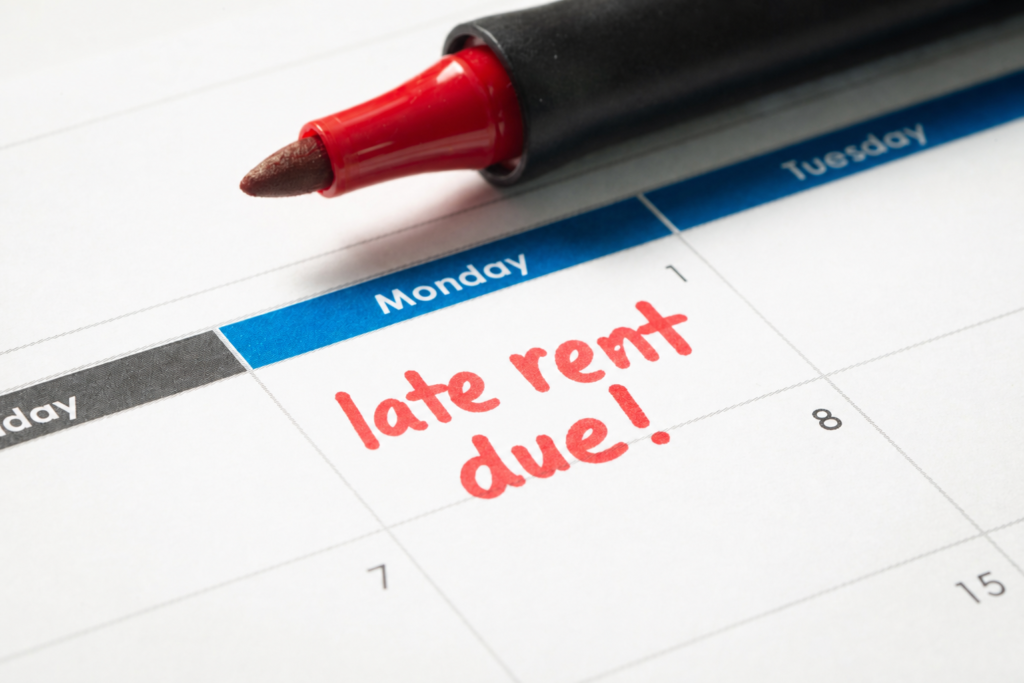
Rent is late again, and now you’re wondering what you can actually do about it. Can you charge a late rent fee? How much is too much? And if the tenant just stops paying altogether, what’s the right next step?
Most small landlords never look this up until the moment they need it — which is exactly the wrong time to be guessing. A late rent fee that’s set too high, or charged too early, can get thrown out by a judge or used against you if the case ever ends up in court.
This guide breaks down what a late rent fee actually is, how much you’re allowed to charge, what to do when a tenant isn’t paying at all, and how good documentation keeps you protected the whole way through. If you’re not already issuing a receipt for every payment, generate your free rent receipt at FreeRentReceipt.com — it’s the first habit worth building before anything else on this list.
This article is for informational purposes only and does not constitute legal or tax advice. Laws vary by state. Consult a qualified attorney or tax professional for advice specific to your situation.
What Is a Late Rent Fee?
A late rent fee is a charge a landlord adds when rent isn’t paid by the due date spelled out in the lease. It’s meant to cover the cost and hassle of chasing down a late payment — not to punish the tenant or pad your income.
For a late rent fee to hold up, it needs to be written into the lease before the tenant signs. You can’t add or raise a late rent fee mid-lease and expect a court to enforce it. If your lease is silent on late fees, you generally can’t charge one at all, no matter how reasonable it seems.
Most leases also build in a grace period — often 3 to 5 days — before a late rent fee kicks in. Check your lease and your state’s rules before you charge anything.
How Much Can You Legally Charge for a Late Rent Fee?
This is where landlords get themselves into trouble. There’s no single national rule for a late rent fee — it comes down to your state, and sometimes your city.
Some states set a hard dollar or percentage cap. Others leave it up to “reasonableness,” which courts generally interpret as somewhere in the 4–5% of monthly rent range. A few examples:
| State | Late Fee Limit |
|---|---|
| Florida | No statutory cap, but courts expect it to stay near 4–5% of rent |
| Tennessee | Capped at 10% of the rent past due, after a 5-day grace period |
| North Carolina | Greater of $15 or 5% of the rent, after a 5-day grace period |
| Hawaii | Capped at set daily amounts tied to rent level |
| Georgia | No statutory cap; reasonableness still applies |
Even in states with no cap, charging something like 15% or 20% of rent as a late rent fee is a common way to lose a dispute in court — judges routinely strike down fees they view as a penalty rather than a genuine cost recovery. Nolo’s state-by-state breakdown of late fee and rent rules confirms that due dates, grace periods, and late fee limits are almost always governed at the state level, not federally — so what’s allowed next door may not be allowed in your state.
State Limits and Lease Requirements
Before you charge a late rent fee, confirm three things: your state allows it (or doesn’t prohibit it), your lease actually states the fee amount and when it applies, and your fee amount stays within what your state — or a judge — would consider reasonable. When in doubt, err low. A modest, consistently-applied late rent fee is far easier to defend than an aggressive one.
Florida doesn’t set a statutory cap on late rent fees, but Fla. Stat. § 83.56 governs the notice process that follows nonpayment, and courts still expect any fee to stay reasonable. Florida landlords should also keep an eye on how fees, notices, and security deposits interact — all three tend to come up together once a tenant falls behind.
When a Tenant Isn’t Paying Rent: What to Do First
A late rent fee is the easy part. The harder question is what to do when a tenant isn’t paying rent at all — not just late, but not paying.
A tenant is entitled to know that any fee or charge added to their balance is one they actually agreed to and one that’s allowed under state or local law — the CFPB’s overview of tenant and debt collection rights covers this from the tenant’s side, which is worth understanding so you’re not caught off guard by a dispute.
Before you escalate anything, take a few practical steps:
- Check the lease and your records. Confirm the due date, the grace period, and whether a late rent fee has already been properly assessed.
- Reach out directly. A quick call or text often resolves things faster than a formal notice. Sometimes it’s a bounced paycheck or a bank hiccup, not a pattern.
- Offer a short, documented payment plan if it makes sense. Get anything you agree to in writing, and issue a receipt for every partial payment received.
- Review your rent collection method. If tenants are missing due dates because paying rent is inconvenient, our guide on how to collect rent from tenants covers options that reduce late payments in the first place. FreeRentReceipt.com’s breakdown of cash vs. digital rent payments is also worth a look if you’re considering switching collection methods.
If none of that resolves it and the tenant remains behind on rent past the grace period, it’s time to move to a formal written notice.
Sending a Formal Notice: The Next Step After a Late Rent Fee
Once a late rent fee hasn’t gotten the tenant to pay, most states require a specific legal document — often called a three-day notice to pay rent, or a pay-or-quit notice — before you can file for eviction. This notice gives the tenant a set number of days to pay in full or vacate.
Getting this document wrong — the amount owed, the deadline, how it’s delivered — is one of the most common reasons eviction cases get dismissed before they start. We’ve covered this process in full, including a state-by-state notice period table and exactly what the notice must include, in our pay or quit notice template guide. If you’re at this stage, that’s the resource to work from directly.
Why Documentation Matters More Than You Think
Every step of this process — the late rent fee, the partial payments, the notice, the outcome — needs a paper trail. If a dispute over a late rent fee or an unpaid balance ever reaches a judge, your records are what decide the case, not your memory of what happened.
Using Rent Receipts to Track Late Payments and Fees
A rent receipt does more than confirm payment. Issued consistently, it becomes a running record of exactly when rent came in, how much was paid, whether a late rent fee was included, and whether any balance remained. That record is often what makes or breaks a landlord’s position if a tenant later claims they paid on time or paid in full.
Generate your free rent receipt to track every payment at FreeRentReceipt.com — it takes seconds, and it’s the single easiest habit that protects you if a late-payment dispute ever escalates. For a broader look at what records to keep and for how long, see FreeRentReceipt.com’s guide to landlord record-keeping.
What Happens If the Tenant Still Doesn’t Pay
If the notice period expires and the tenant hasn’t paid or vacated, your next step is typically filing for eviction with your local court. The notice you served — and the payment history you can show — become key exhibits in that filing. Our guide on eviction notice templates and how to file walks through what that stage looks like.
Keep in mind that some tenants qualify for emergency rental assistance through local or state programs, which can resolve a balance — including any accrued late rent fee — before the case ever reaches court.
For more rental management advice, browse our Landlord Tips category. For receipt templates, documentation help, and proof-of-payment guidance, explore our Rent Receipts category.
A late rent fee, a clear notice, and a receipt for every payment are what separate a landlord who’s protected from one who’s guessing. Generate a free rent receipt at FreeRentReceipt.com and start building that record today.
Frequently Asked Questions
How much can a landlord charge for a late rent fee? It depends on your state. Some cap it at a flat percentage (often 4–10% of rent) or a set dollar amount; others leave it to “reasonableness,” which courts generally read as staying near 4–5% of monthly rent. Your lease must also spell out the exact fee in advance.
Is a late rent fee legal in every state? Late rent fees are legal almost everywhere, but the rules on amount, grace periods, and disclosure vary widely by state — and sometimes by city. Check your state’s landlord-tenant statute before setting or changing a fee.
Can a landlord charge a late rent fee if it’s not in the lease? Generally, no. A late rent fee only holds up if the lease clearly states the amount and when it applies. Adding one after the tenant has already signed usually isn’t enforceable.
What happens after a three-day notice expires? If the tenant hasn’t paid the amount owed (including any valid late rent fee) or vacated by the deadline, the landlord can typically move forward with filing for eviction in local court.
Can a landlord evict a tenant for one late payment? Usually not for the late payment alone, but a single missed payment past the grace period can be enough to trigger a formal pay-or-quit notice in most states, which starts the path toward eviction if the tenant doesn’t pay or leave.
